Michelin Grapes: A Credible Classification, but a Missed Opportunity for Wine
Michelin’s new wine classification brings simplicity and global authority to a complicated category. But by beginning with Burgundy’s most celebrated producers, has it reinforced what the market already knows at the very moment many wine estates need something more practical?
WINE CULTURE & ORIGINS
Luke Mircea-Willats
7/13/20267 min read

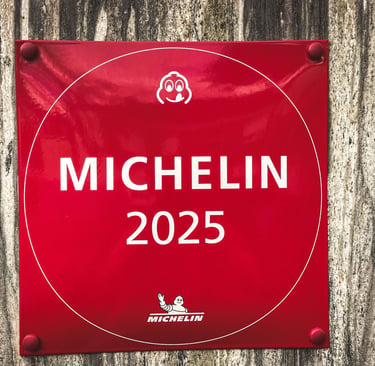
Michelin has officially entered the business of classifying wine estates. Its inaugural wine selection covers Burgundy's Côte de Nuits, Côte de Beaune, and Côte Chalonnaise, recognizing 94 producers. Nine estates received the highest distinction of Three Michelin Grapes, 20 received Two Grapes, 33 received One Grape, and a further 32 were included as Selected estates. Bordeaux is expected to follow.
The structure is immediately familiar. One, two, or three grapes echo the language of Michelin's restaurant stars and offer consumers a simple hierarchy:
Three Grapes recognizes exceptional producers whose wines, according to Michelin, can be approached with complete confidence regardless of vintage.
Two Grapes identifies excellent producers standing out within their region and peer group.
One Grape recognizes very good producers, particularly those capable of performing strongly in favorable vintages.
Michelin says its inspectors evaluate estates according to five criteria: the quality of agronomy, technical mastery, the producer's identity, balance in the wines, and consistency over time. The assessment is therefore broader than reviewing an individual bottle. It is intended to judge the producer as a whole.
There is much to admire in the idea. But there is also a more fundamental question that has received less attention than the individual rankings. What problem is Michelin trying to solve?
The strengths of the Michelin approach
Wine can be unnecessarily complicated. Consumers encounter appellations, vineyard classifications, critic scores, vintage charts, producer reputations, merchant recommendations, and increasingly crowded online rating platforms. Each tells us something slightly different, but together they can make wine feel inaccessible.
Michelin's greatest advantage is therefore simplicity. A one-to-three-grape system is easy to understand. It avoids the often questionable precision of distinguishing between a wine awarded 94 points and one receiving 95. It also gives consumers a broader answer to a useful question. Is this a producer I can generally trust?
That is different from assessing a single wine from a single vineyard in a single vintage. A domaine-level distinction can recognize qualities that a bottle score may overlook: consistency across a range, viticultural philosophy, cellar expertise, stylistic identity, and performance through stronger and weaker years.
Michelin also brings global recognition extending far beyond specialist wine audiences. Many consumers who have never consulted a Burgundy critic understand immediately what a Michelin distinction is intended to signify. That ability to translate complexity into an accessible symbol should not be underestimated.
The classification may also help shift attention away from individual blockbuster wines and towards the estate's long-term work. In principle, that is a healthy development. Great wine begins in the vineyard and reflects decisions made over decades, not simply the characteristics of one highly rated vintage.
Where the classification becomes less convincing
The difficulty is not necessarily the idea of judging producers. It is the lack of clarity around how those judgments were reached. Michelin has published the five broad assessment criteria, but it has provided limited operational detail.
We do not yet know how many wines were tasted from each estate, which vintages were assessed, whether every selected producer received a vineyard or cellar visit, how many inspectors evaluated each estate, or whether any portion of the tasting was conducted blind. This matters because Michelin is making strong claims, particularly when it suggests that a Three-Grape producer can be trusted regardless of vintage.
There is also the unresolved question of comparison. How should a small estate working predominantly with regional and village appellations be assessed against a domaine with access to some of Burgundy's greatest Grand Cru vineyards?
Michelin refers to producers being assessed within their region and peer group, but it has not publicly defined those peer groups. Nor has it clearly explained how vineyard holdings, production scale, négociant activity, pricing, or the breadth of an estate's range influence the final distinction. The classification may be based on serious and thoughtful tasting. But without greater transparency, the apparent precision of dividing estates into four levels can feel stronger than the published methodology supports.
Classification or confirmation?
The first Three-Grape list includes names such as Domaine de la Romanée-Conti, Domaine Leroy, Domaine d'Auvenay, Domaine Georges Roumier, Coche-Dury, and Domaine Hubert Lamy. These are among the most famous, sought-after, and heavily scrutinized producers in the world.
Their inclusion is understandable. A new guide needs credibility, and excluding Burgundy's established elite would have created an entirely different controversy. Yet it also reveals the central limitation of Michelin's chosen approach. Burgundy does not lack critical attention.
Its leading producers already enjoy extraordinary global demand. Allocations are tiny. Waiting lists are long. Secondary-market prices can be detached from any realistic notion of ordinary wine consumption. Many of the highest-ranked domaines are difficult or impossible for the general public to visit, and their wines are beyond the reach of most consumers.
A Michelin distinction may further strengthen their prestige, but it is difficult to argue that these estates need additional visibility. Michelin has therefore begun where its influence is likely to create the least meaningful benefit.
There is also a risk that consumers misread the classification. Michelin is assessing the producer, not declaring that every wine made by a Three-Grape estate is inherently superior to every wine produced by an estate receiving Two Grapes. Nor is Michelin replacing Burgundy's vineyard hierarchy. A village wine from a Three-Grape producer does not somehow become equivalent to a Grand Cru. Yet the visual power of a simple ranking inevitably encourages exactly these comparisons.
Wine already has numerous ranking systems
Michelin is also entering a space that is hardly empty. Appellation systems explain geographical origin. Historic classifications establish hierarchies of vineyards or estates. Critics assess individual wines and vintages. Merchants interpret quality through the lens of price, availability, and drinking potential. Consumer platforms aggregate public opinion. Sustainability certifications measure farming and environmental practices.
Michelin Grapes adds another layer: an overall assessment of the producer. That may prove useful, but Michelin has not yet clearly explained how the new system is intended to sit alongside all the others.
A wine industry under pressure
Michelin’s move also comes at a difficult moment for the wider wine industry. According to the International Organization of Vine and Wine, global consumption fell to an estimated 208 million hectolitres in 2025, down 2.7%, while vineyard area contracted for a sixth consecutive year. Export volumes fell by 4.7% and export value by 6.7%, reflecting weaker demand, changing consumer behavior, reduced purchasing power, trade uncertainty, and climate pressure. These challenges are especially acute for smaller estates outside the few regions sustained by scarcity and global collector demand.
For many producers, the real question is not whether they deserve two grapes rather than one. It is whether consumers know they exist, whether they can reach them directly, and whether their businesses remain viable. This is where Michelin could have played a more transformative role.
The opportunity Michelin may have missed
There was another path available, one that would have been more distinctive, more useful, and arguably far closer to Michelin's origins. Michelin could have created the world's leading guide to wine tourism.
The original Michelin Guide did not merely identify excellence. It encouraged people to travel towards it. Its famous restaurant language was explicitly tied to whether a restaurant was worth a stop, a detour, or a special journey. That logic could have translated beautifully into wine.
A tourism-based distinction could have considered wine quality alongside hospitality, education, authenticity, landscape, cultural significance, accessibility, and vineyard stewardship. The familiar Michelin framework could have been retained:
One Grape: worth a stop
Two Grapes: worth a detour
Three Grapes: worth a special journey
This would not have been a diluted version of wine criticism. It would have been a new and valuable category in its own right.
The economic case for wine tourism
Wine tourism is becoming an increasingly important source of revenue and resilience. The 2025 Global Wine Tourism Report, based on data from 1,310 wineries across 47 countries, found that around two-thirds considered tourism profitable, with tourism generating approximately 25% of winery revenue on average.
Grand View Research valued the global wine tourism market at $46.5 billion in 2023 and forecasts it could reach $106.7 billion by 2030. While wine consumption is declining, demand for travel, gastronomy, and authentic experiences continues to grow. A vineyard visit can create a connection with wine that no numerical score can replicate.
Helping the estates that actually need it
Most importantly, a tourism-led guide could have directed Michelin's influence towards the producers and regions that would benefit from it most. Wine is far bigger than Burgundy.
Across the world, excellent family estates struggle for attention. Historic cooperatives preserve local vineyards but rarely attract international recognition. Emerging regions produce increasingly compelling wines without the promotional resources of famous appellations. Rural communities need sustainable tourism and direct-to-consumer sales to remain economically viable. For these producers, a Michelin distinction could be transformative.
It could bring visitors through the cellar door, encourage direct purchases, support local restaurants and hotels, and help preserve viticultural landscapes. A Three-Grape award for an already unattainable Burgundy estate may increase prestige and potentially prices. A Three-Grape tourism distinction for a remarkable family producer in a lesser-known region could help secure its future. That is a very different kind of value.
Michelin could have helped travelers discover the volcanic vineyards of the Canary Islands, the historic cellars of Tokaj, family estates in the Douro, emerging producers in Greece, the mountain vineyards of Switzerland, South Africa's Swartland, or overlooked appellations throughout France, Italy, and Spain.
It could also have recognized not only grand estates but small domaines, cooperatives, wine museums, vineyard trails, and communities offering a genuine connection between wine, people, and place. Such a guide would complement existing critics rather than compete with them.
A good idea, but perhaps not the most useful one
The Michelin Grapes classification has genuine strengths. It is simple. It recognizes the producer rather than only the bottle. It considers viticulture, identity, and consistency. It may help less-experienced consumers navigate a notoriously complex category. It also has the potential, as it expands, to introduce audiences to estates beyond the most familiar names. But its launch in Burgundy feels more like confirmation than discovery.
Michelin has applied one of the world's most powerful recommendation brands to estates that already occupy the summit of the fine-wine market. In doing so, it may have created another credible ranking, but not necessarily something wine was missing. “he more ambitious opportunity was to return to the purpose that made Michelin influential in the first place: helping people decide where it is worth traveling.
A global Michelin guide to wine destinations could have connected quality with place, wine with hospitality, and recognition with meaningful economic benefit. It could have directed travelers not only towards the estates everyone already knows, but towards the producers, families, and regions that deserve to be discovered.
Michelin originally helped people travel towards excellence. The wine guide still has the opportunity to do the same.
Considering your next wine decision? Whether you are reviewing a cellar, considering an auction lot, building a collection, or rethinking a restaurant wine program, an initial conversation can help clarify the right next step.
© 2026. All rights reserved.
Independent fine-wine insights, vintage analysis, and advisory for private collectors, fine-wine buyers, and restaurants. No commercial bias.