Bordeaux 2024 En Primeur: A Vintage for the Selective, Not the Speculator
A clear-eyed assessment of Bordeaux 2024 en primeur: a challenging, low-volume vintage where terroir, discipline and price matter more than reputation. A guide for selective buyers, not speculators.
BORDEAUX
Luke Mircea-Willats
1/9/20265 min read
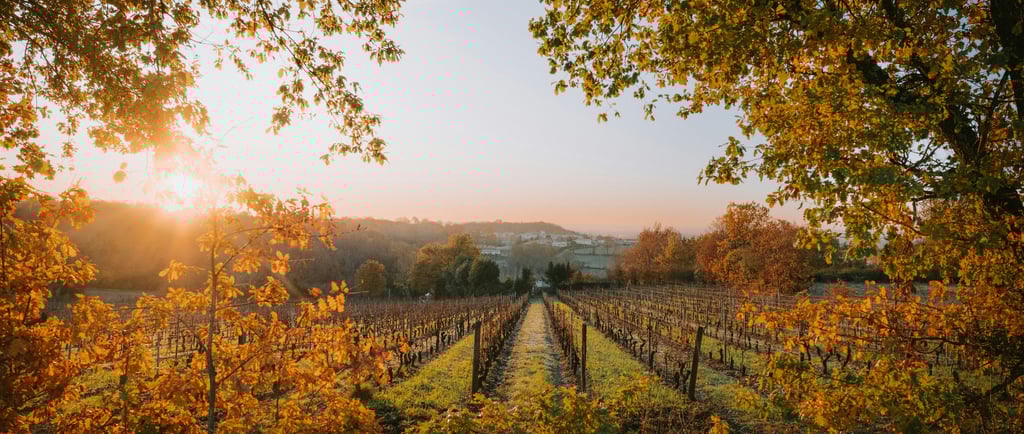
Bordeaux 2024 is not a vintage that rewards haste. With the 2024 en primeur campaign now largely behind us, the vintage can be judged with far greater clarity than at the time of release.
This is a challenging, classical, low-volume year in which success depends far more on terroir, vineyard discipline, and restraint in the cellar than on vintage reputation alone.
This analysis draws on extensive tastings and reporting from some of Bordeaux’s most respected long-term observers, including James Lawther MW, Gavin Quinney, and colleagues who live and work in the region year-round. Their detailed coverage of the 2024 growing season, harvest conditions, and cask tastings provides essential context for understanding what this vintage offers en primeur.
For collectors and en primeur buyers, 2024 was all about precision buying, realistic price expectations, and understanding where Bordeaux quietly succeeded and where it did not.
A Difficult Year, But Not a Lost One
The 2024 growing season tested Bordeaux from the outset.
Persistent winter and spring rain, the wettest winter since 2000, created ideal conditions for downy mildew, followed by widespread coulure and millerandage, particularly in Merlot. Hail compounded losses in parts of Fronsac, Lalande-de-Pomerol, and later in Listrac and Moulis. Sunshine was limited, especially during key ripening periods.
A benign spell in July and August offered hope, but rain returned during harvest, forcing difficult vineyard decisions and severe selection in the cellar.
Two or three decades ago, little respectable wine would have been made under such conditions. That Bordeaux has produced wines of interest at all speaks to how far viticulture and winemaking have advanced.
Stylistically, the vintage has a distinctly oceanic profile. The vintage generally shows sower alcohols, higher acidity (lower pH), red-berry aromatics, moderate depth rather than density, and finer, more discreet tannins.
Comparable vintages such as 1988 and 2004 come to mind — though 2024 often shows purer fruit and better tannin handling thanks to modern techniques.
A Historically Small Crop
Production figures underline how atypical this vintage is.
Bordeaux produced 331.8 million litres in 2024, making it the smallest harvest since 1991, with average yields of 35 hl/ha. This follows three already reduced crops and brings the four-year average (2021–2024) to roughly 23% below the previous decade.
The composition of the harvest is telling: 80.5% red, 10.5% dry white, 3.5% Crémant, 1.1% sweet wine.
Structurally, Bordeaux is contracting. Vineyard area is declining, bulk red production remains economically unviable in many zones, and an estimated 30% of volume is financially unsustainable. Against this backdrop, 2024’s low yields bring supply closer to market demand, but unevenly and painfully.
Terroir Matters More Than Ever
If one lesson defines Bordeaux 2024, it is that terroir was decisive.
Vineyards on gravel, clay, and limestone soils, capable of absorbing excess water while promoting hydric stress later in the season, clearly outperformed sandy soils, which struggled to retain structure and freshness.
In the vineyards, success in 2024 depended heavily on disciplined, labour-intensive practices. Grass cover was maintained to help manage excess soil moisture, while targeted leaf removal improved aeration and reduced disease pressure. Crop thinning was used to equalise ripening across parcels. At harvest, many estates applied ruthless sorting, in the vineyard and again in the cellar, to ensure only healthy, ripe fruit made it into the final blends.
In the cellar, winemakers broadly favoured gentle extraction, cooler fermentations, and longer macerations. Chaptalisation (adding sugar to grape must) was widespread, particularly for Cabernet Sauvignon harvested at under 12% and Merlot at under 13%, and was usually applied judiciously rather than aggressively.
The result is a vintage where mid-palate substance is often the limiting factor, and where selectivity is paramount.
The Left Bank: Cabernet Sauvignon Takes the Lead
On the Left Bank, Cabernet Sauvignon clearly leads the best wines, benefiting from its later ripening and resilience.
Yields were dramatically low. Pauillac averaged 29.5 hl/ha, with some organically farmed estates reportedly far lower, yet quality here is generally more consistent than elsewhere.
The wines lean towards classical restraint: red currant and cassis aromatics, moderate alcohol, fine-grained tannins, and fresh, linear structures.
St-Julien emerges as the most reliable commune overall. Margaux offers notable highs but greater variability, while Pessac-Léognan reds are often more subdued and less expressive than their white counterparts.
The Right Bank: Uneven, Terroir-Driven, Cabernet Franc as an Ally
The Right Bank bore the brunt of the challenges of 2024’s growing season.
Merlot suffered extensively from mildew and poor fruit set. Average yields fell to 28.4 hl/ha in Pomerol, with Fronsac and Lalande-de-Pomerol even lower due to hail. Several respected producers chose not to bottle a grand vin at all.
On the Right Bank, results were highly site-dependent. The Pomerol plateau outperformed lower-lying vineyards, while in St-Émilion, clay and gravel soils in the north-west fared far better than sandier parcels. Cabernet Franc proved particularly valuable, adding structure, aromatic lift, and tension where Merlot alone often fell short.
Some limestone-based wines are fresh and precise, though acidity can verge on austerity where fruit weight is lacking. On the Right Bank in particular, these are wines that must be judged individually, not by reputation.
Whites: The Quiet Triumph of Bordeaux 2024
If Bordeaux 2024 has a clear success story, it lies in the whites.
Cool nights in August and September preserved aromatics, while better flowering conditions resulted in significantly higher yields than for reds. Dry white harvests generally took place between 2 and 10 September, ahead of sustained autumn rains.
The best examples show: Explosive Sauvignon Blanc aromatics, citrus-driven, linear Sémillon, and an excellent balance between freshness and concentration.
Pessac-Léognan dominates, but Médoc whites continue to gain ground, supported by the creation of a dedicated appellation from 2025.
Sauternes and Barsac: Balance Over Opulence
Sweet wines also performed admirably.
High humidity encouraged botrytis, but patient growers waited for dry windows to build concentration. Residual sugar levels typically range from 110 to 130 g/l, occasionally higher, yet the wines remain lively and balanced.
Compared with 2022, these wines are less rich, more lifted, and more immediately drinkable.
For collectors, 2024 offers an appealing, understated Sauternes and Barsac vintage, especially where pricing is sensible.
Pricing: The Deciding Factor
This is not a vintage that supports blind buying, but pricing has moved meaningfully.
Early Bordeaux 2024 en primeur releases showed clear and widespread reductions versus 2023, typically in the 20–30% range, with some leading estates cutting even more aggressively. In several cases, 2024 release prices now sit at or near their lowest levels in a decade, a notable shift after years of buyer resistance.
That said, price cuts have not been uniform. While some châteaux have recalibrated decisively, others remain optimistic about quality and the secondary market. As a result, buyer enthusiasm has improved selectively rather than broadly, with demand gravitating toward wines where pricing, quality, and long-term value align.
In short, pricing has improved, but discipline is still required. Even at reduced levels, 2024 only makes sense where prices adequately reflect the modest depth of the vintage and its earlier-drinking profile.
The Grand Cru Select Verdict
Bordeaux 2024 is all about judgment.
This is a vintage where pricing finally supported engagement, but only for buyers willing to be selective. When reductions of 20–30% versus 2023 were fully delivered, 2024 offered classical, well-balanced wines at levels not seen for many years, particularly from disciplined producers on the Left Bank, alongside excellent dry whites and finely balanced Sauternes.
This is a year to prioritise Cabernet-led Left Bank wines with freshness and restraint, while being highly selective on the Right Bank, judging wines individually. Take dry whites and Sauternes seriously, where quality clearly outperformed reds.
Handled with care, Bordeaux 2024 can reward buyers with early-drinking, classical wines at materially improved entry points. Handled indiscriminately, or at insufficiently reduced prices, it will struggle to justify en primeur commitment.
Considering your next wine decision? Whether you are reviewing a cellar, considering an auction lot, building a collection, or rethinking a restaurant wine program, an initial conversation can help clarify the right next step.
© 2026. All rights reserved.
Independent fine-wine insights, vintage analysis, and advisory for private collectors, fine-wine buyers, and restaurants. No commercial bias.