Bordeaux 2022: The Vintage That Returned on Its Own Terms
Initially misunderstood and commercially misaligned, Bordeaux 2022 now stands revealed in bottle as one of the most confident modern vintages of the region, shaped by restraint, experience, and a new definition of balance.
BORDEAUX
Luke Mircea-Willats
2/8/20264 min read
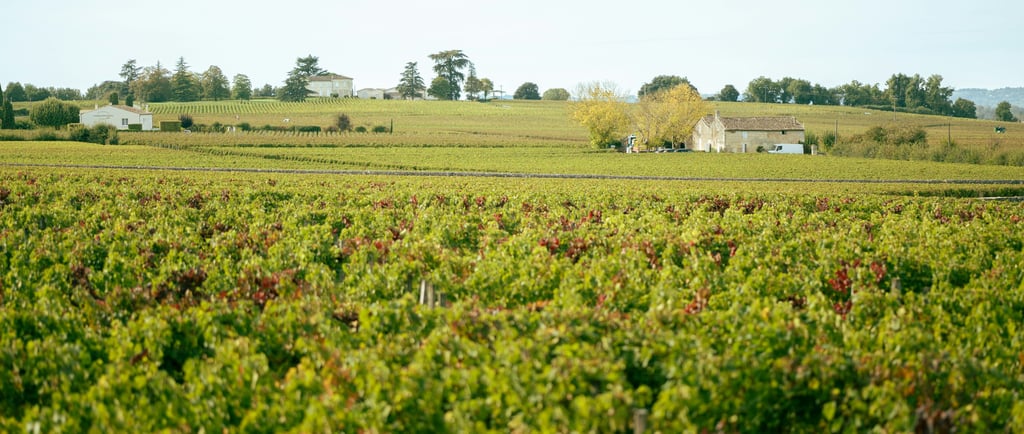
When Bordeaux first revealed the wines of the 2022 vintage en primeur, the reaction was oddly restrained. Tastings suggested exceptional raw material: wines of depth without heaviness, aromatic range despite heat, and textures that felt polished rather than forced, but the campaign itself struggled to gain momentum. Prices were ambitious, the broader market was fatigued, and the incentive to buy early felt increasingly disconnected from reality. Many collectors admired the wines, but stepped back all the same. That hesitation now feels less like doubt about quality and more like a question of timing.
Seen today in the bottle, the 2022 vintage has emerged with far greater clarity. Freed from the pressure of release cycles and market mechanics, the vintage reads as one of the clearest statements yet of how far Bordeaux has come in learning to navigate extremes. While these were never wines that required urgency, this vintage has quietly benefitted from patience. For collectors revisiting the vintage now, this pause has created a very different point of entry.
The growing season itself was relentless. A dry winter gave way to a warm, early spring, with budbreak and flowering unfolding smoothly. From early summer onward, drought and heat became structural features rather than episodic events. Temperatures repeatedly breached historic thresholds, sunlight was intense, and rainfall was sparse. Yet the defining difference from earlier hot vintages lay in chronology. Stress arrived early and remained consistent, forcing vines to adapt rather than react.
Reduced vegetative growth limited water loss, berries developed with smaller size and thicker skins, and fruit loads moderated naturally. Modern viticulture amplified this resilience. Cover crops preserved soil moisture, organic matter helped regulate temperatures, and aggressive leaf removal was largely avoided. At harvest, many vineyards, from Pauillac to Pessac-Léognan, retained green, functioning canopies. This alone set 2022 apart from the cautionary tale of 2003. Bordeaux had anticipated the season.
Harvest decisions reflected the same maturity. Estates with experience of recent warm years harvested with confidence rather than fear, guided by phenolic ripeness rather than sugar accumulation. The widespread availability of smaller fermentation vessels allowed parcels to be harvested and vinified independently, an advantage that proved decisive. Fruit could be picked when ready rather than when convenient. In this context, Merlot surprised many observers. Far from collapsing under heat, it performed superbly where farming was disciplined, adding breadth and generosity to blends at estates such as Château Cheval Blanc, Vieux Château Certan, and La Conseillante.
In the cellar, 2022 demanded restraint. The grapes arrived with immense concentration, making extraction almost effortless. The most convincing wines emerged not from intervention but from discretion. Fermentations were gentler, macerations shorter, pump-overs fewer. Even so, tannin levels at leading estates rivalled benchmarks from more structured years. The difference lay in texture. Where producers listened to the fruit — at properties such as Léoville Las Cases, Palmer and Les Carmes Haut-Brion — tannins feel enveloping rather than assertive, contributing shape without austerity. Where habitual winemaking prevailed, the wines hardened quickly, revealing the vintage's intolerance for force.
Élevage reinforced this sense of precision. New oak played a more discreet role than in many recent vintages, with greater use of large formats, seasoned wood, and neutral vessels. The results in the bottle are striking. Despite elevated alcohols and higher solvent capacity, oak integration has been seamless. Aromatics remain clear, textures fluid, and finishes calm. Early fears that the vintage's chemistry might invite instability have largely proven unfounded. Compared with the previous year, incidences of microbial deviation appear lower, strengthening confidence in the wines' technical integrity.
Perhaps the most intriguing aspect of Bordeaux 2022 is its freshness. Analytically, many wines challenge classical definitions of balance. Yet in the glass, they feel vivid, articulate, and composed. This energy arises less from acidity than from phenolic ripeness, tannin quality, and aromatic precision. It marks a stylistic shift rather than a loss of identity, a reminder that harmony need not always announce itself through sharp lines.
As bottles have been revisited, patterns across the region have become clearer. The Left Bank delivered the greatest consistency. Saint-Julien stands out for its composure and harmony, Pauillac for its authority and depth, Saint-Estèphe for the way its clay-rich soils buffered vines through drought. Margaux proved more variable, but where sensitivity prevailed, at estates such as Palmer or Brane-Cantenac, grace survived power. Pessac-Léognan may come to be seen as one of the vintage's defining successes, with Domaine de Chevalier, Haut-Bailly, and Les Carmes Haut-Brion capturing both intensity and finesse.
On the Right Bank, terroir and discipline sharply separated outcomes. Limestone and clay sites in Saint-Émilion delivered wines of structure and lift, while Pomerol favoured old vines and meticulous sorting. Several satellite appellations quietly overperformed, offering wines of balance and identity that now invite renewed attention. Dry whites are generally shaped by ripeness rather than tension, while the sweet wines of Sauternes and Barsac rank among the vintage's crowning achievements.
Stylistically, the 2022 Bordeaux vintage occupies a new space in the region's modern history. It is increasingly discussed alongside the great run of 2018 to 2020, not because the wines are identical in expression, but because they reflect the same level of control and confidence. Where 2019 and 2020 lean on classical tension, 2022 relies more heavily on texture, phenolic completeness, and composure. It is richer, broader, and more openly persuasive, yet rarely excessive.
The wines already offer pleasure on the nose, but their structure suggests a long, steady evolution rather than a fleeting arc. They are likely to harmonise before fragmenting into complexity, developing breadth and polish before tertiary nuance asserts itself. This is not the aging curve of cooler, acid-driven vintages, nor the exaggerated trajectory once feared from hot years. It is something quieter and more assured.
Seen this way, the faltering en primeur campaign appears less consequential. The wines were not overlooked; they were released into a market unwilling to rush. Ironically, that pause now feels constructive. Bordeaux 2022 is a vintage that rewards discrimination over immediacy and understanding over momentum.
Ultimately, Bordeaux 2022 is not defined by the extremes that shaped it, but by the calm that followed. It reflects a region no longer improvising in the face of climate, but acting with intention and confidence. In the glass, the wines feel grounded and complete, shaped by experience rather than reaction. It is a vintage that did not need to be rushed, and perhaps one that never wanted to be.
Considering your next wine decision? Whether you are reviewing a cellar, considering an auction lot, building a collection, or rethinking a restaurant wine program, an initial conversation can help clarify the right next step.
© 2026. All rights reserved.
Independent fine-wine insights, vintage analysis, and advisory for private collectors, fine-wine buyers, and restaurants. No commercial bias.